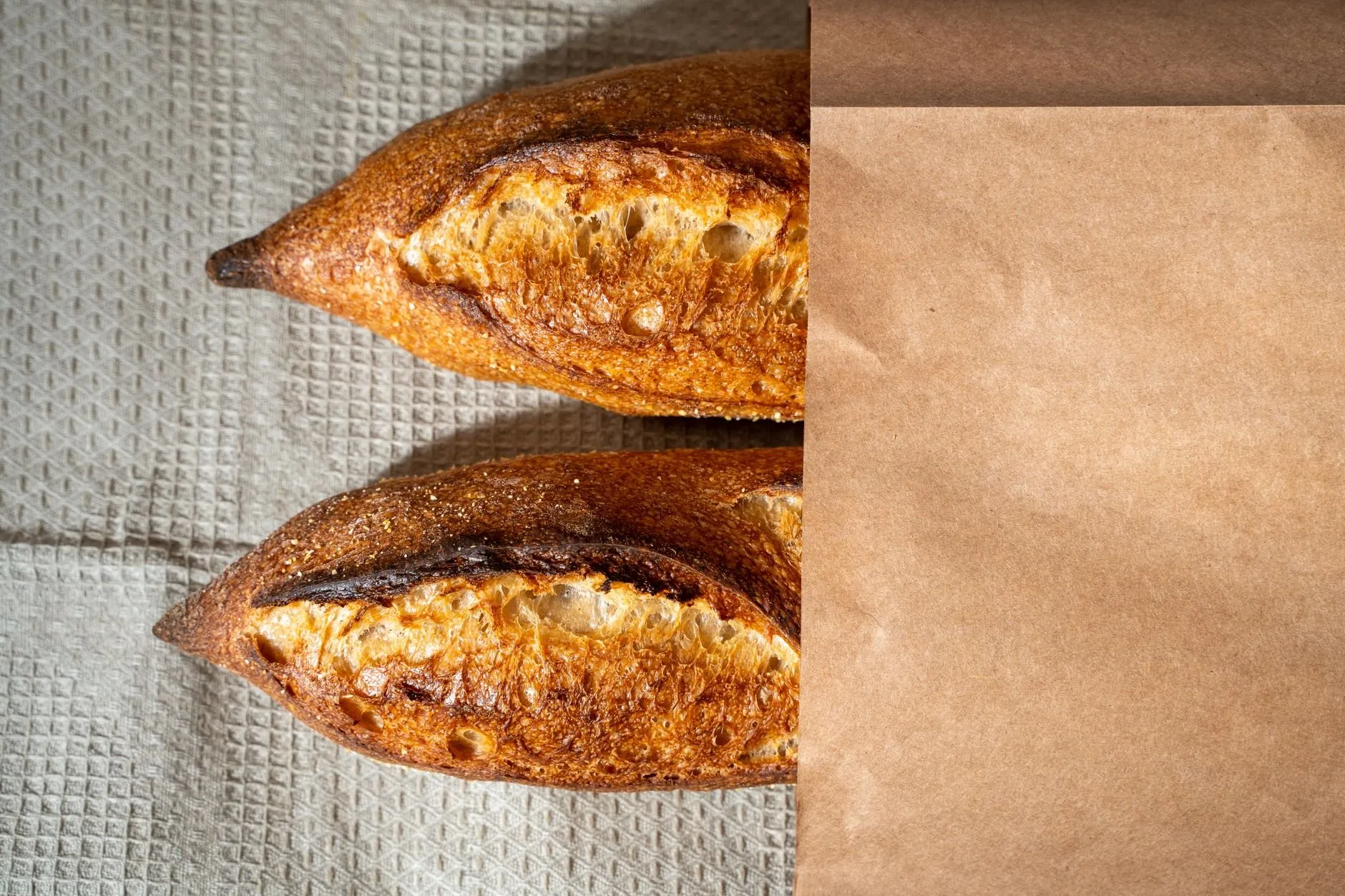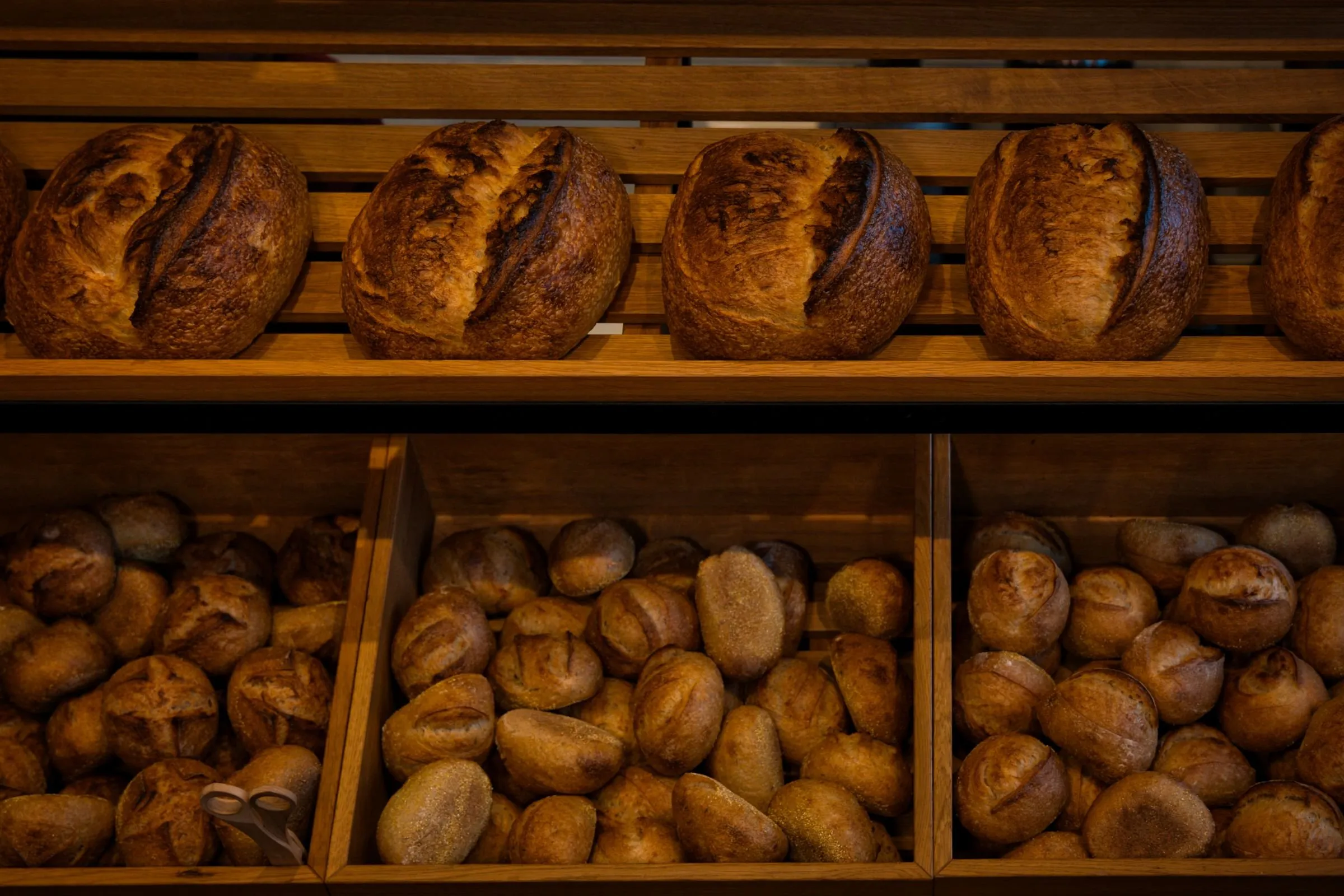
Open Wednesday to Sunday on Calder Row, Hartsmere
Sourdough out of the oven at six, on the counter by eight.
Stone-milled wholegrain loaves, slow-proofed croissants and buns, baked every morning we open. Loaves from £2.80.
4.9 from 412 Google reviews · baking here since 2016
On the counter today
Chalked up at 7:30
- Calder Country £6.50 Usually gone by 12:30
- Row White £5.80 Usually gone by 13:00
- Dark Malthouse Rye £5.50 Usually gone by 14:00
- Calder Baguette £2.80 Usually gone by 11:30
- Butter Croissant £3.20 Usually gone by 10:30
- Cinnamon Bun £3.40 Usually gone by 11:00
Sell-out times are a typical Saturday. Set yours aside by 2pm the day before.
-
Out of the oven by 6
Everything on the counter was baked the morning you buy it. Nothing is held over.
-
Order by 2pm, collect tomorrow
Pre-orders are set aside under your name, so the Saturday sell-out never reaches you.
-
Milled on Calder Row
We stone-mill our own wholegrain three mornings a week, from two farms in the county.
-
Allergens on every label
Each bake lists its allergens on the shelf ticket, the bag and the website.
The breads
What's on the racks this week
Six of the ten things we bake, all on one sourdough culture except the baguette. Every price is the counter price; pre-orders cost the same.
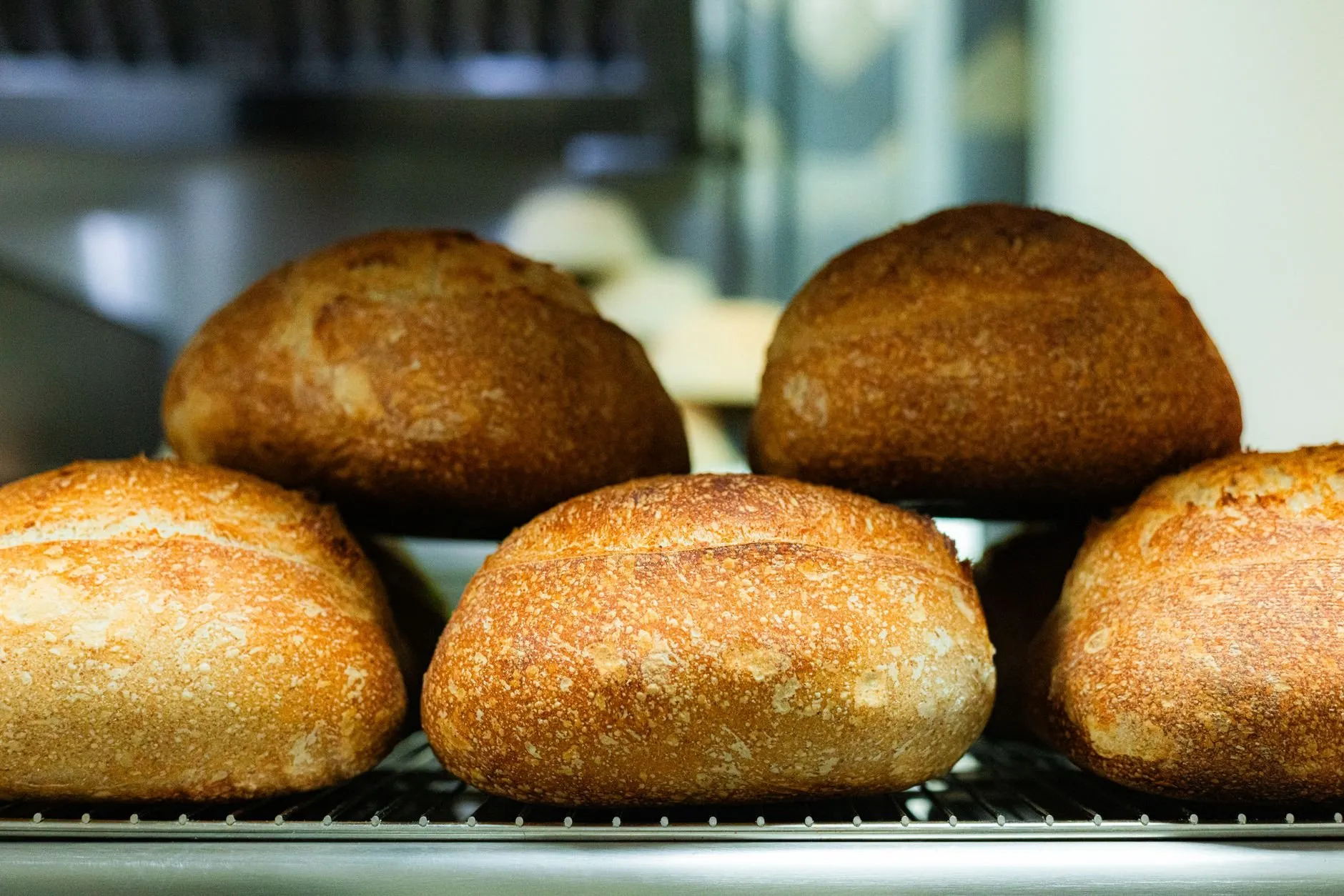
Calder Country
Wholegrain sourdough · 900 g
£6.50
Baked Wed–Sun Details
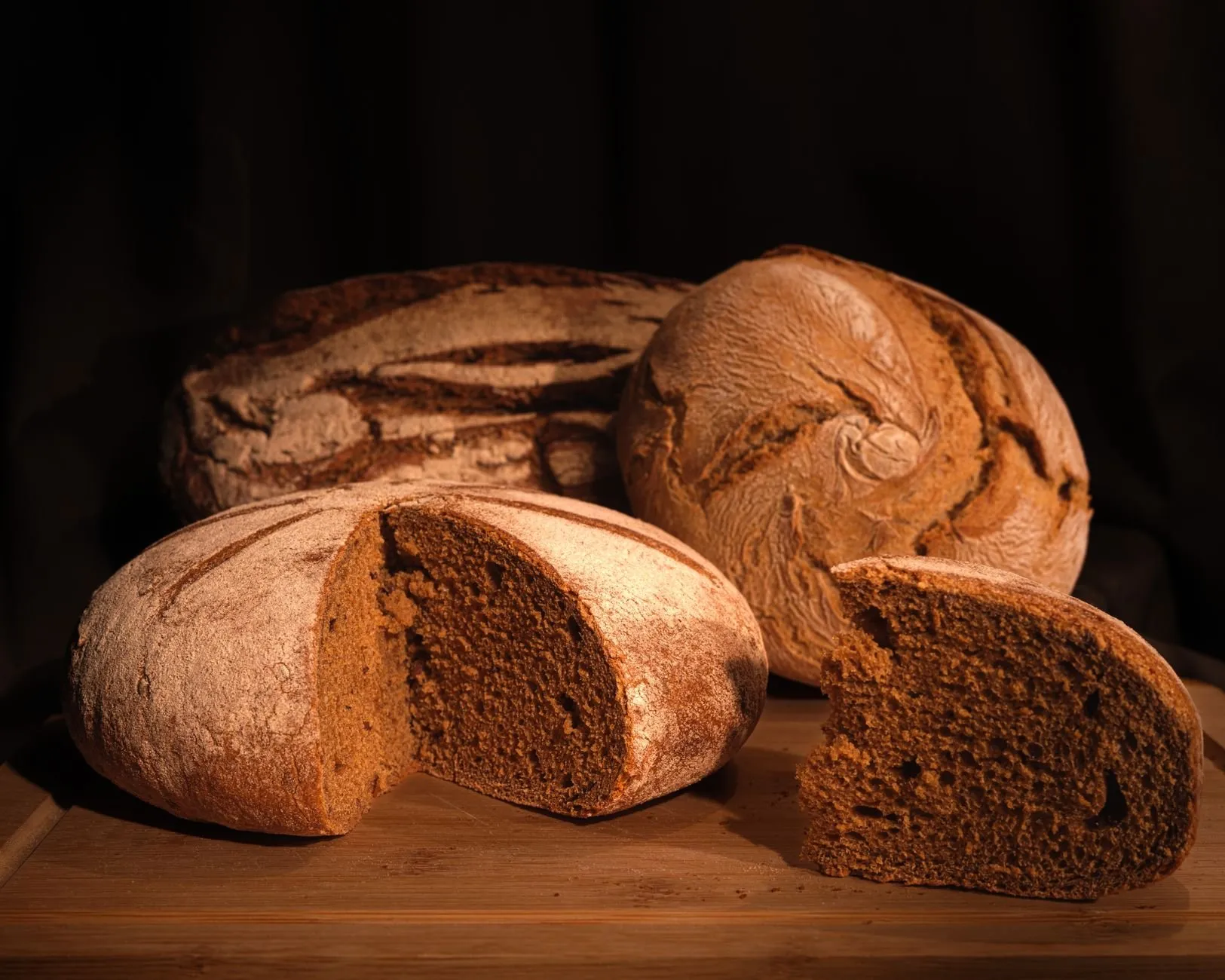
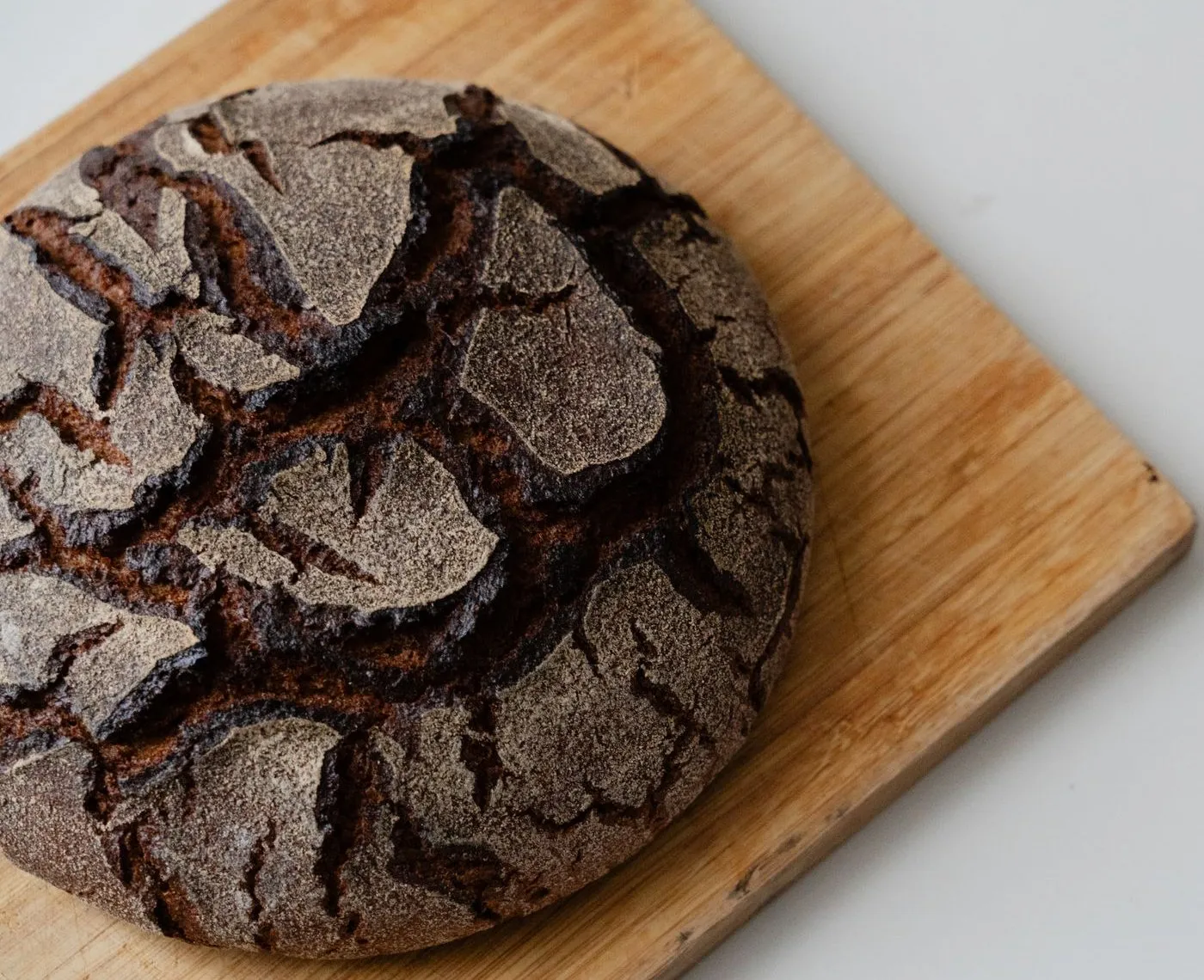
Dark Malthouse Rye
100% rye, house-malted · 800 g
£5.50
Baked Fri–Sun Details
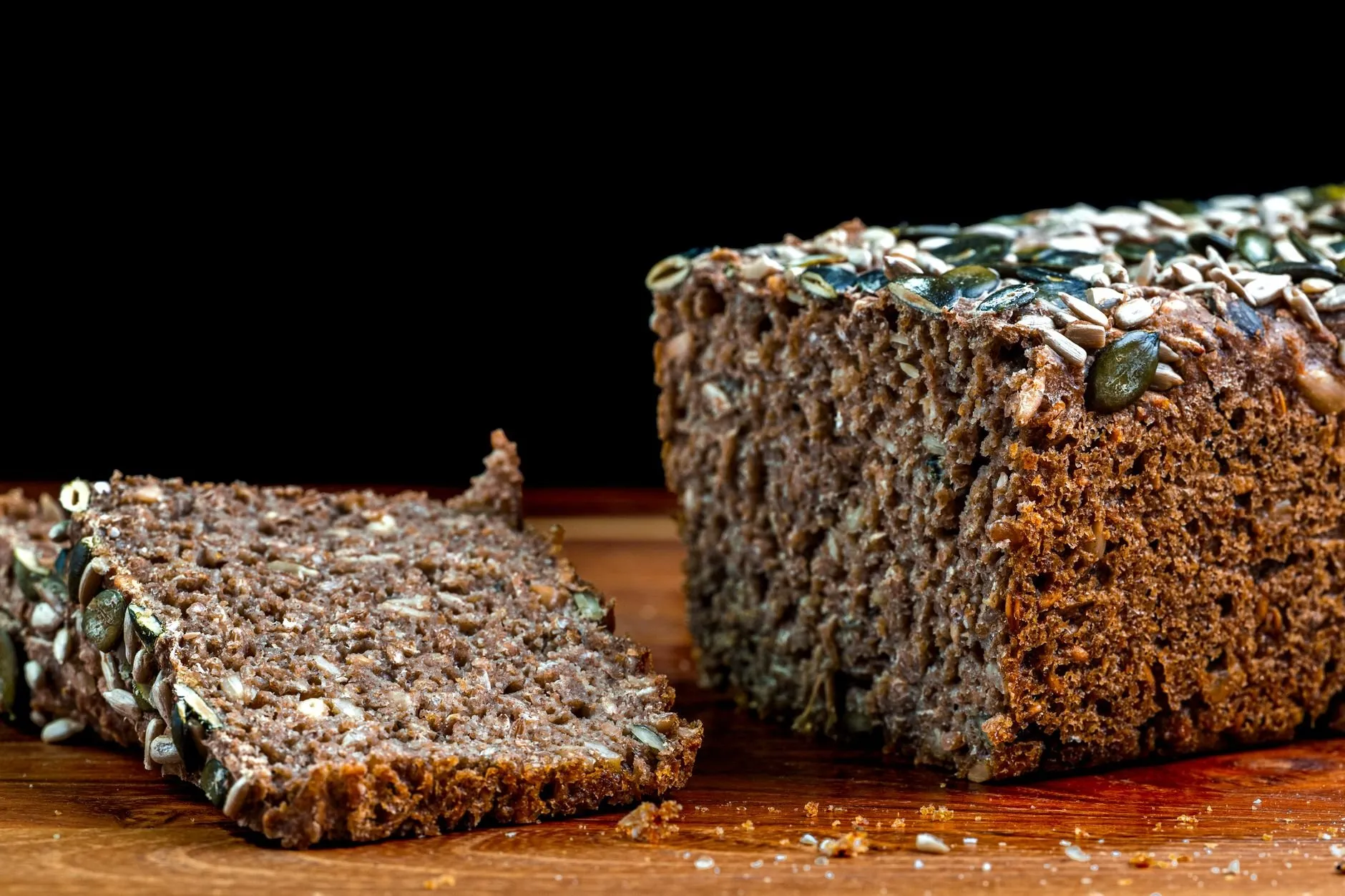
Seeded Rye Tin
Wholegrain rye with seeds · 1 kg
£6.20
Baked Wed–Sun Details
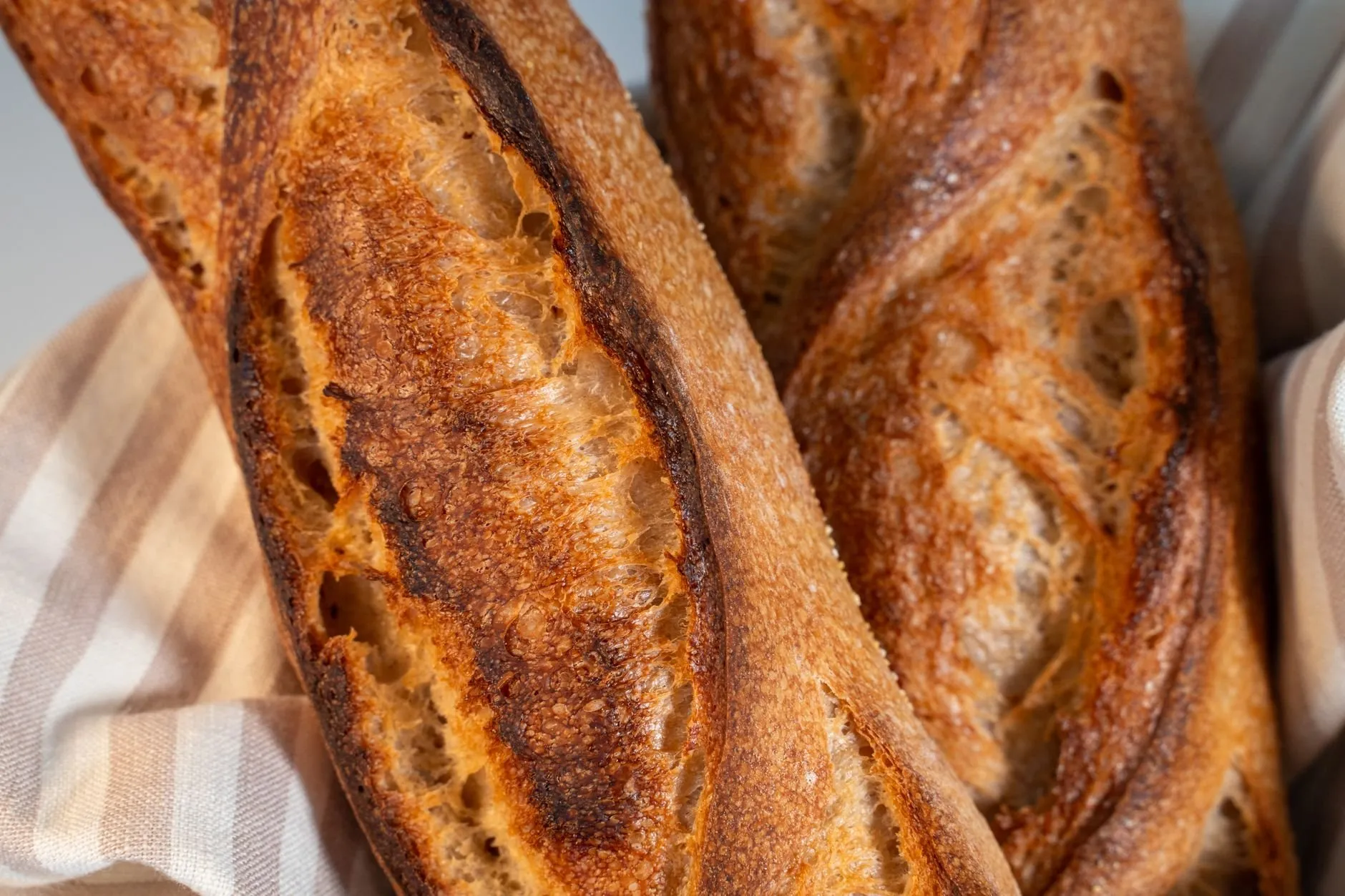
Calder Baguette
Poolish baguette · 300 g
£2.80
Baked Wed–Sun Details
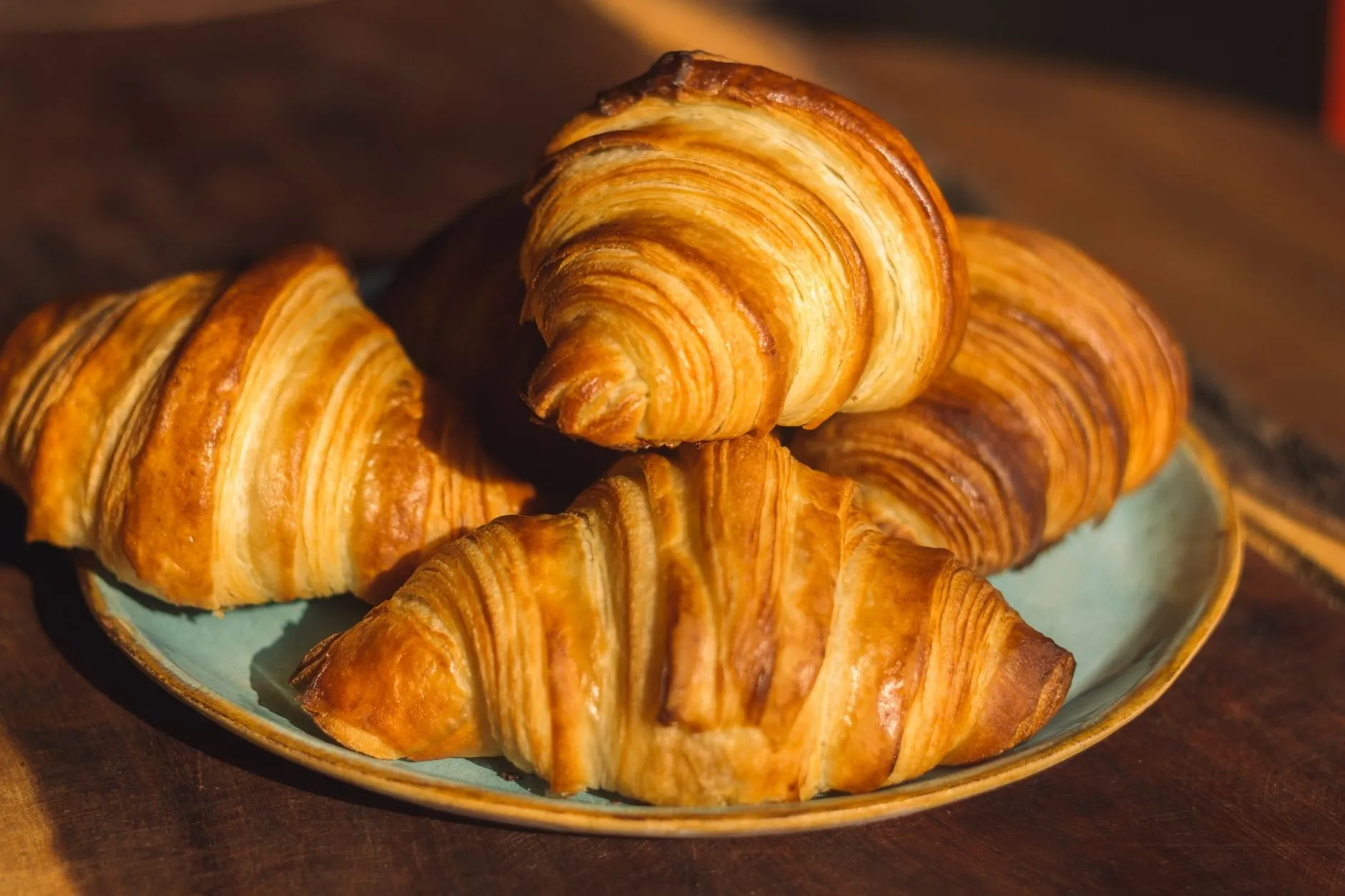
Butter Croissant
Laminated viennoiserie · 85 g
£3.20
Baked Wed–Sun Details
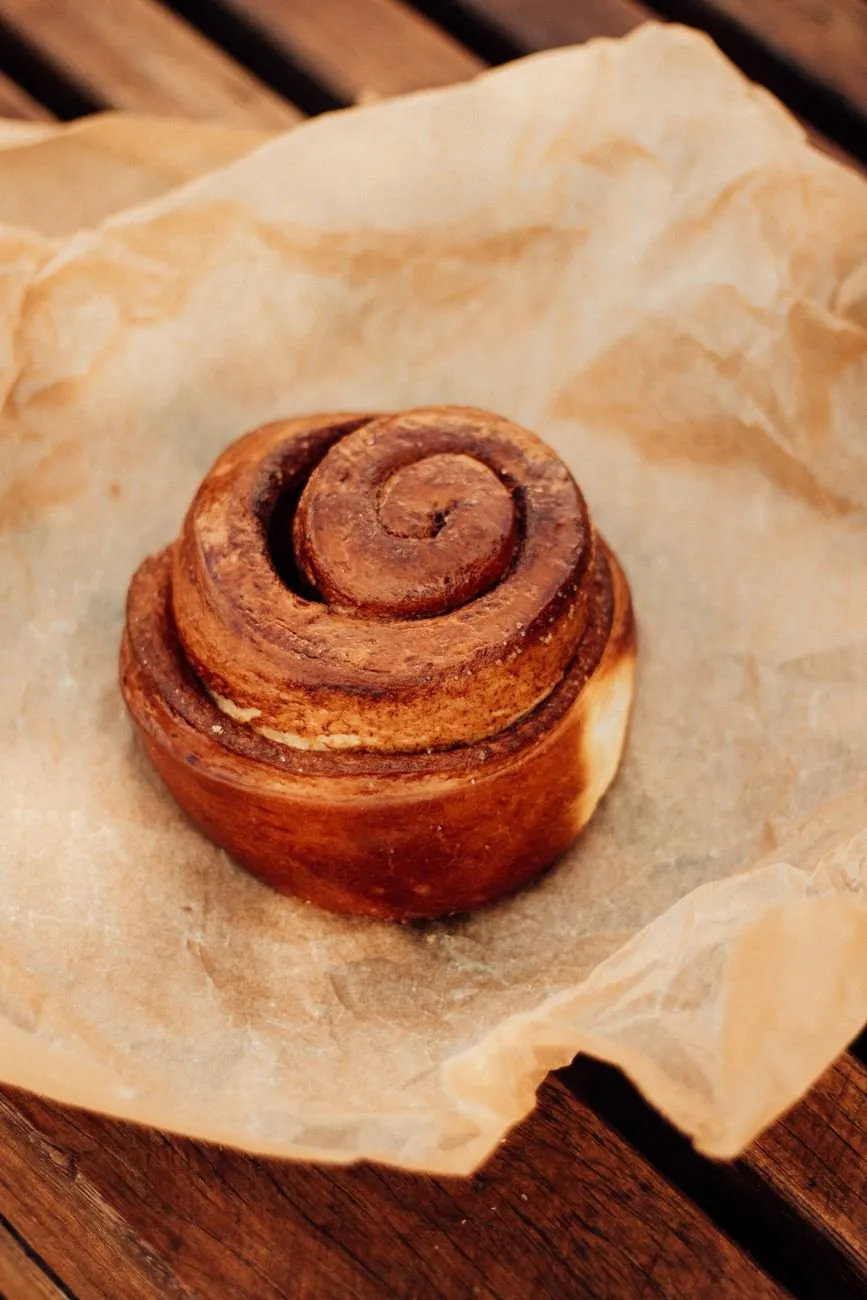
Cinnamon Bun
Enriched sweet dough · 110 g
£3.40
Baked Wed–Sun Details
The bakehouse
We mill the flour ourselves, three mornings a week
Maltgarth started in 2016 as one deck oven and a stone mill in a former cooperage on Calder Row. It is still that, with four bakers, two farms that grow our grain, and a culture fed twice a day since the first bake.
- Hours of fermentation
- 18–24
- Miles to our grain
- 14
- Loaves on a Saturday
- 420
From berry to bag
How does one loaf take thirty hours?
Mostly by waiting. The hands-on work is twenty minutes; the rest is flour, water and time in the cold room.
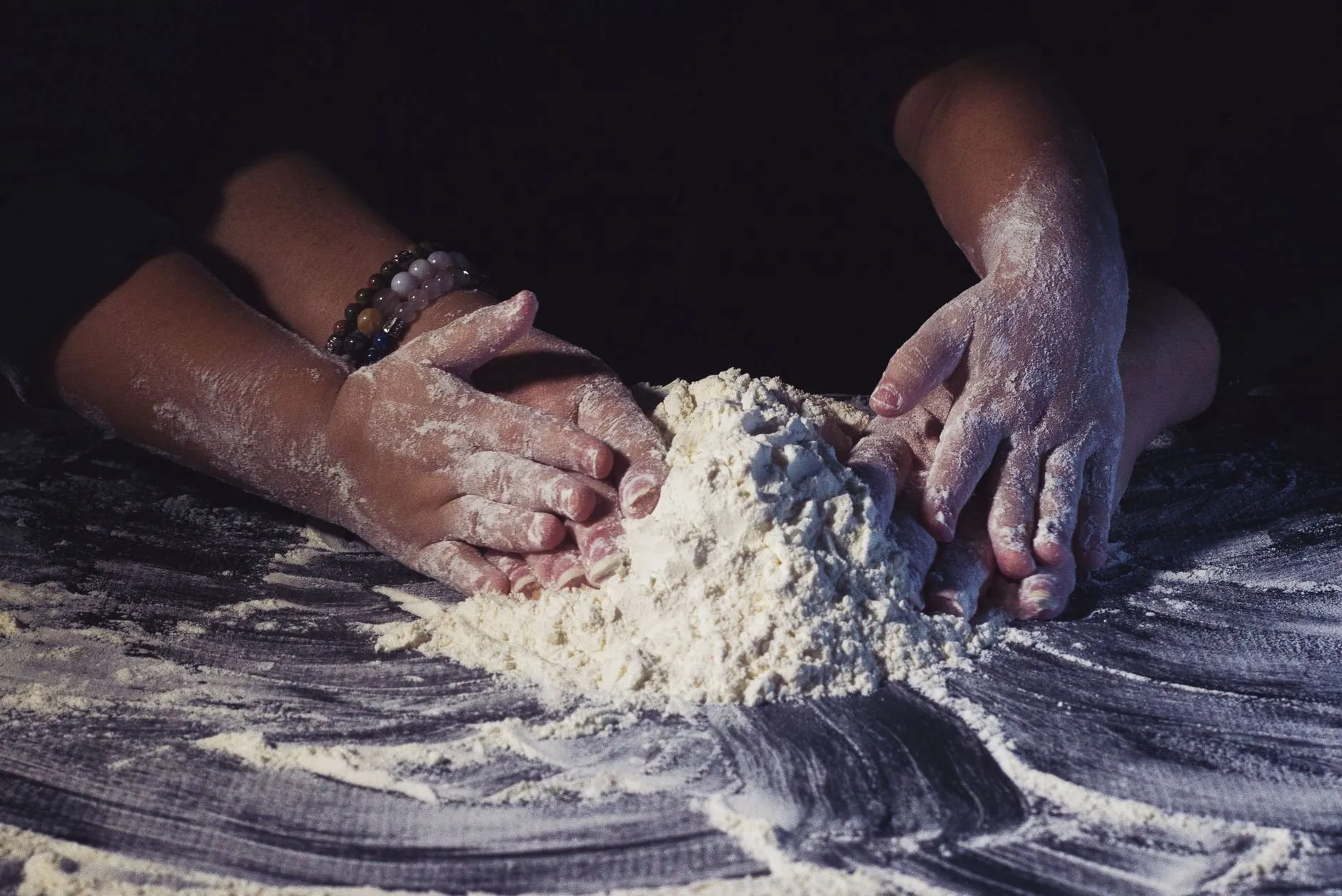
Mill
Wheat and rye berries from two county farms, stone-milled on Calder Row three mornings a week.
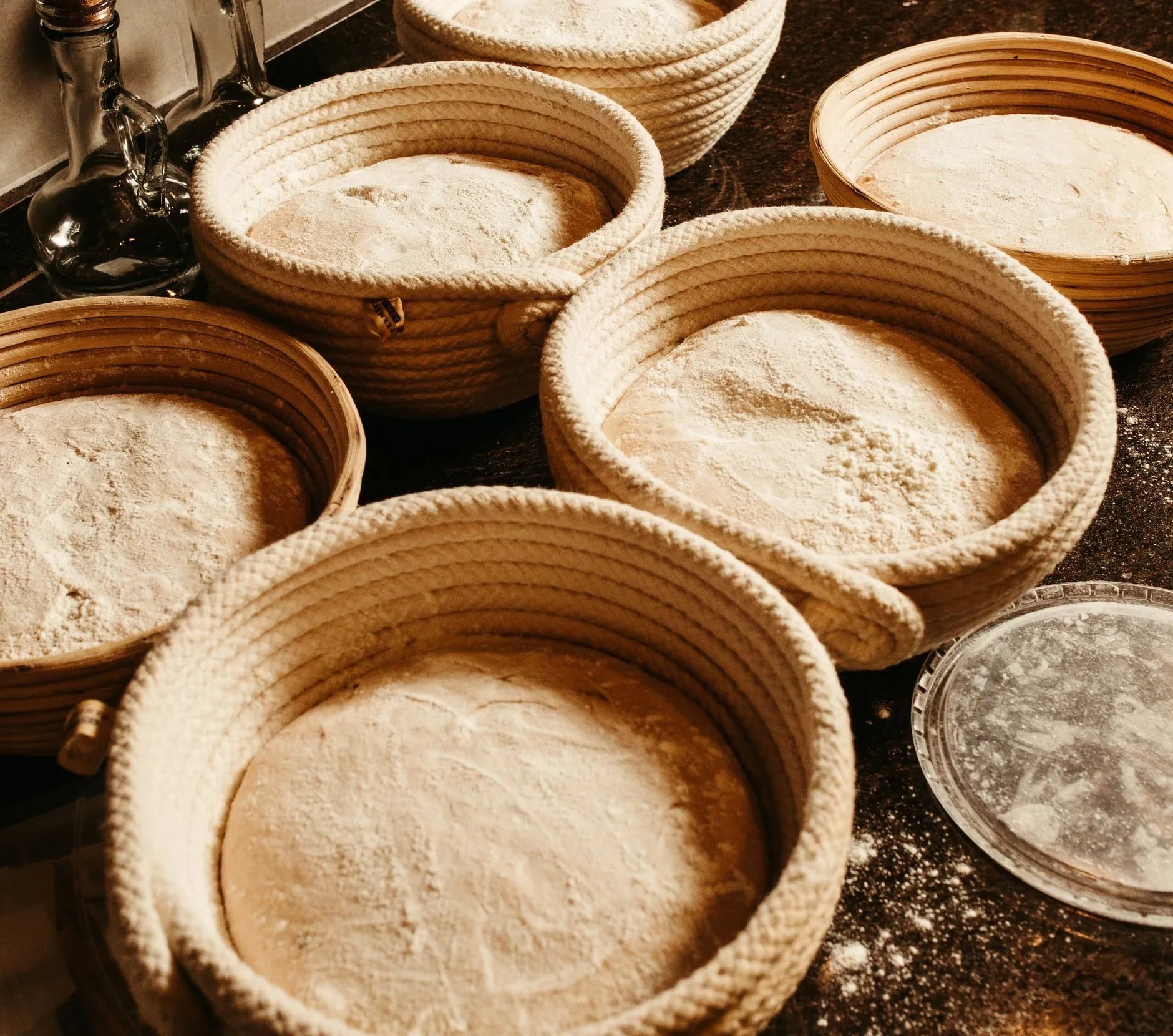
Ferment
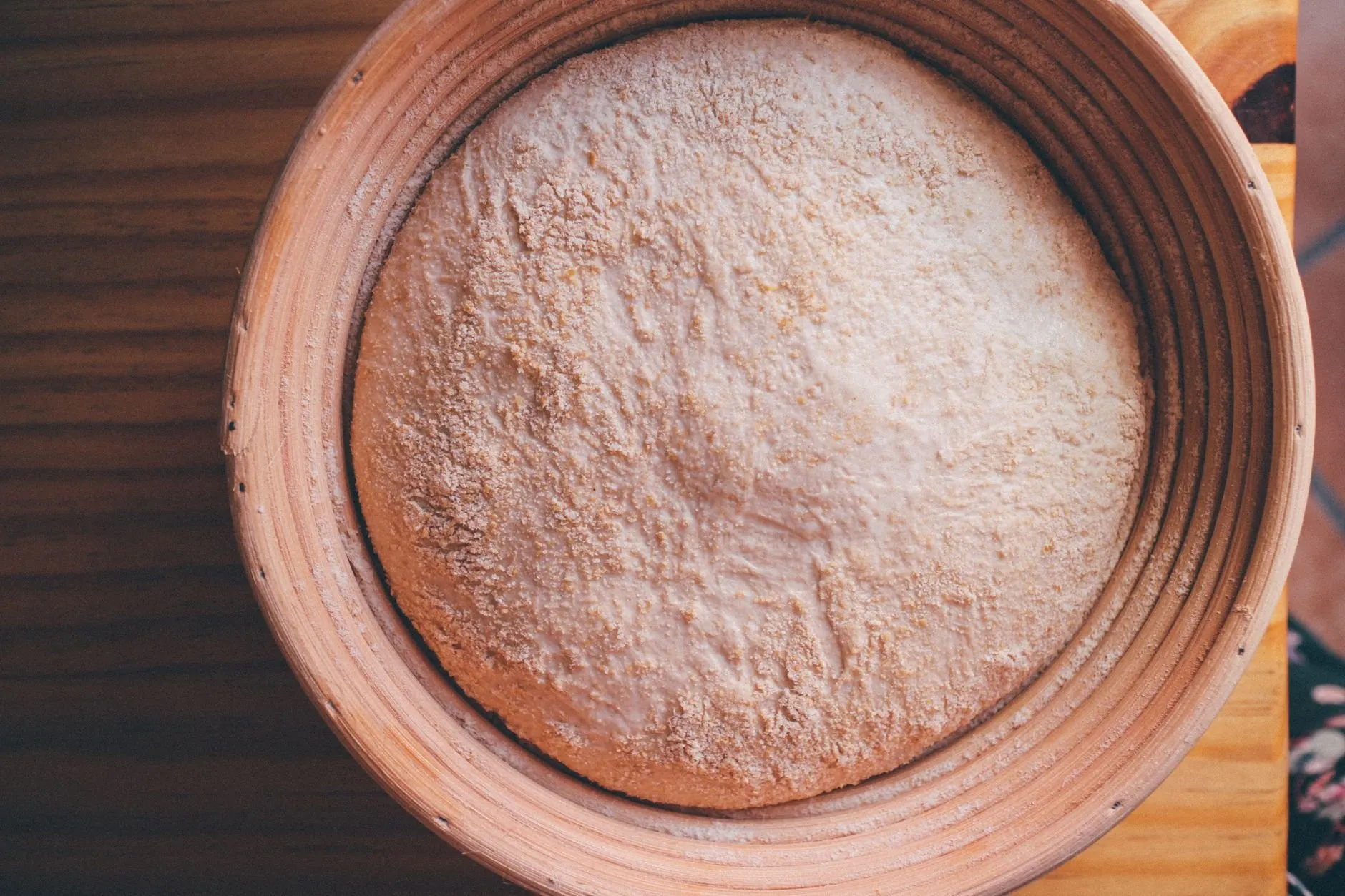
Mixed in the afternoon, folded by hand, then 18 to 24 hours in the cold room in cane baskets.
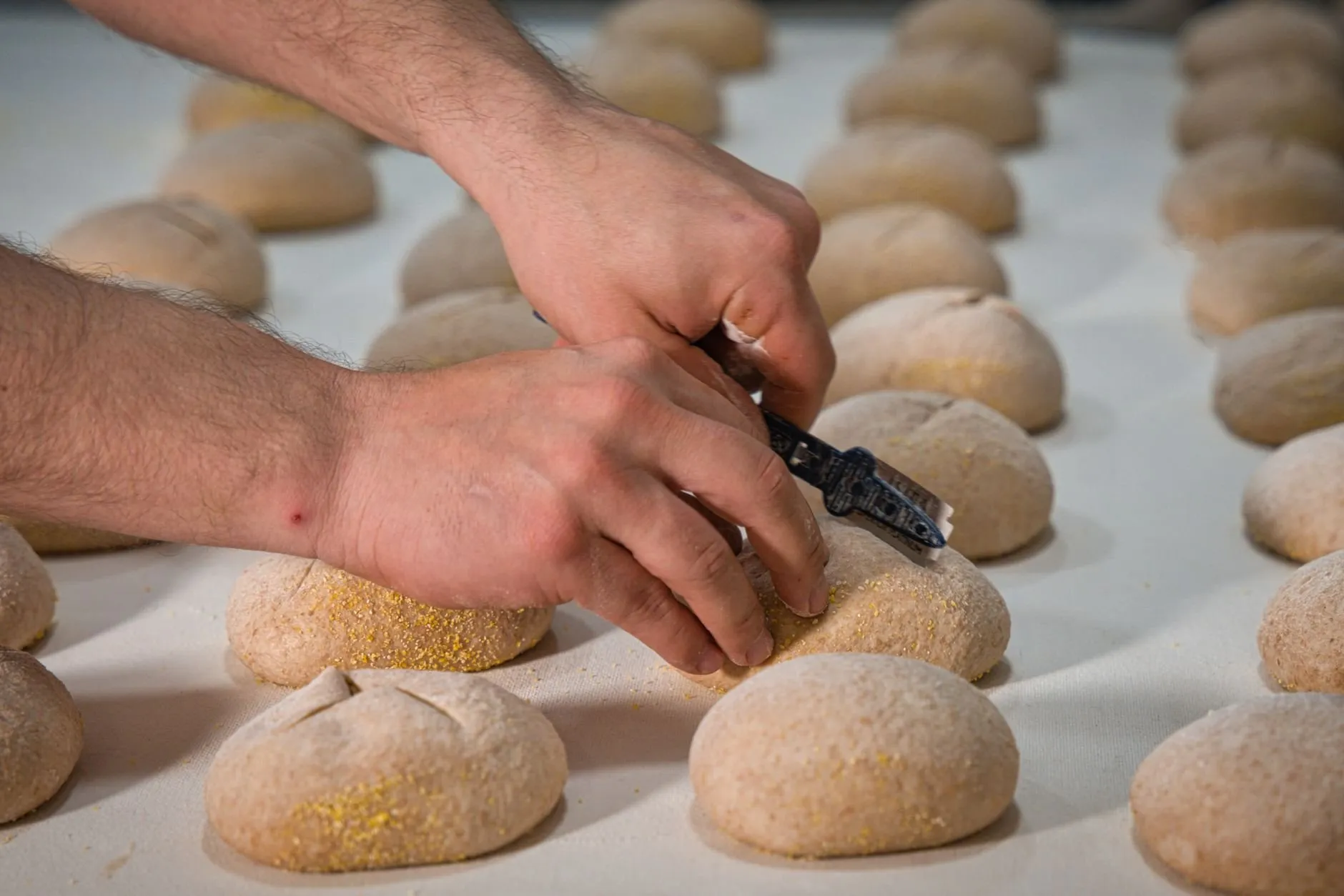
Shape and score
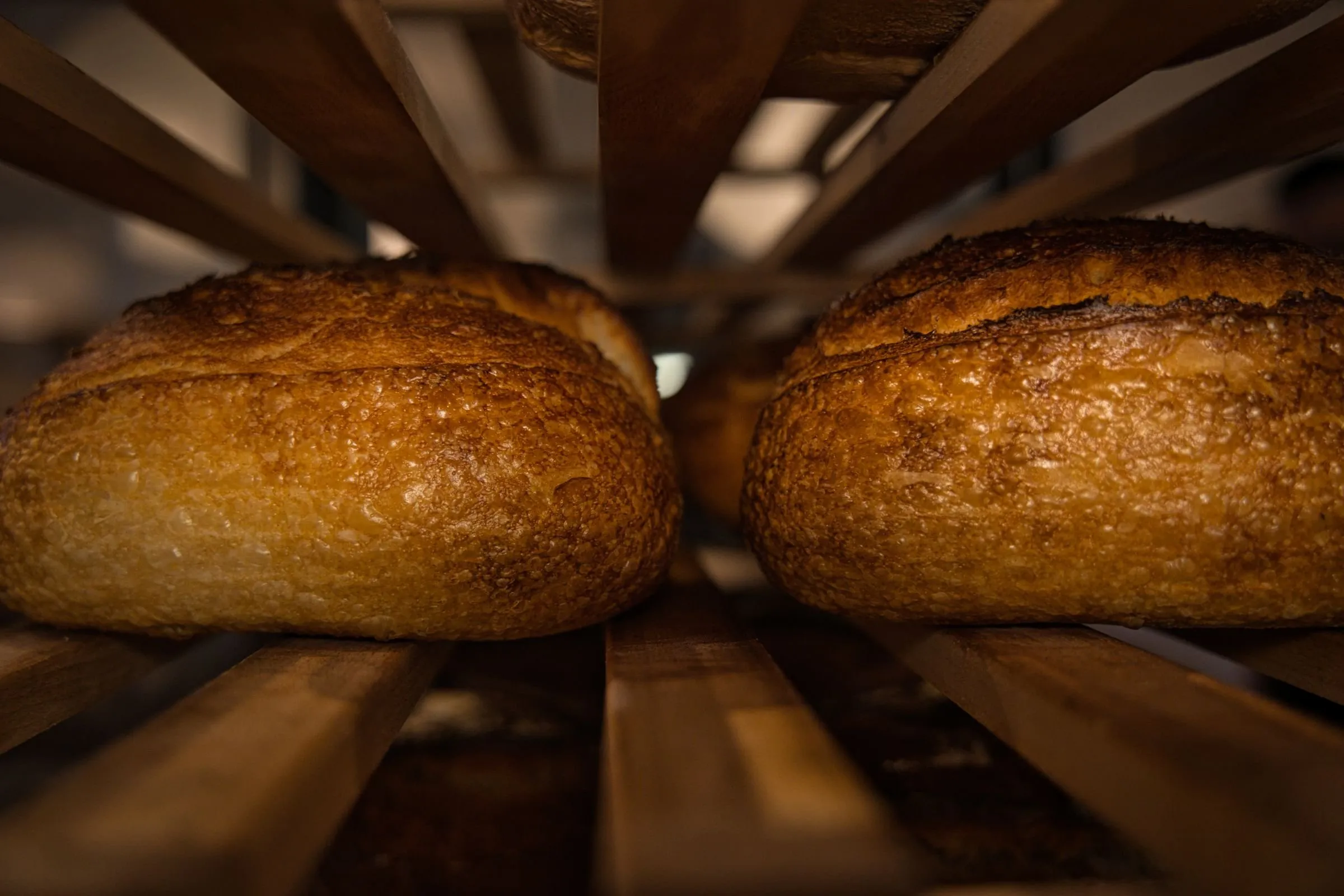
Every loaf is shaped and scored by hand at 4am, then loaded straight into the deck oven.
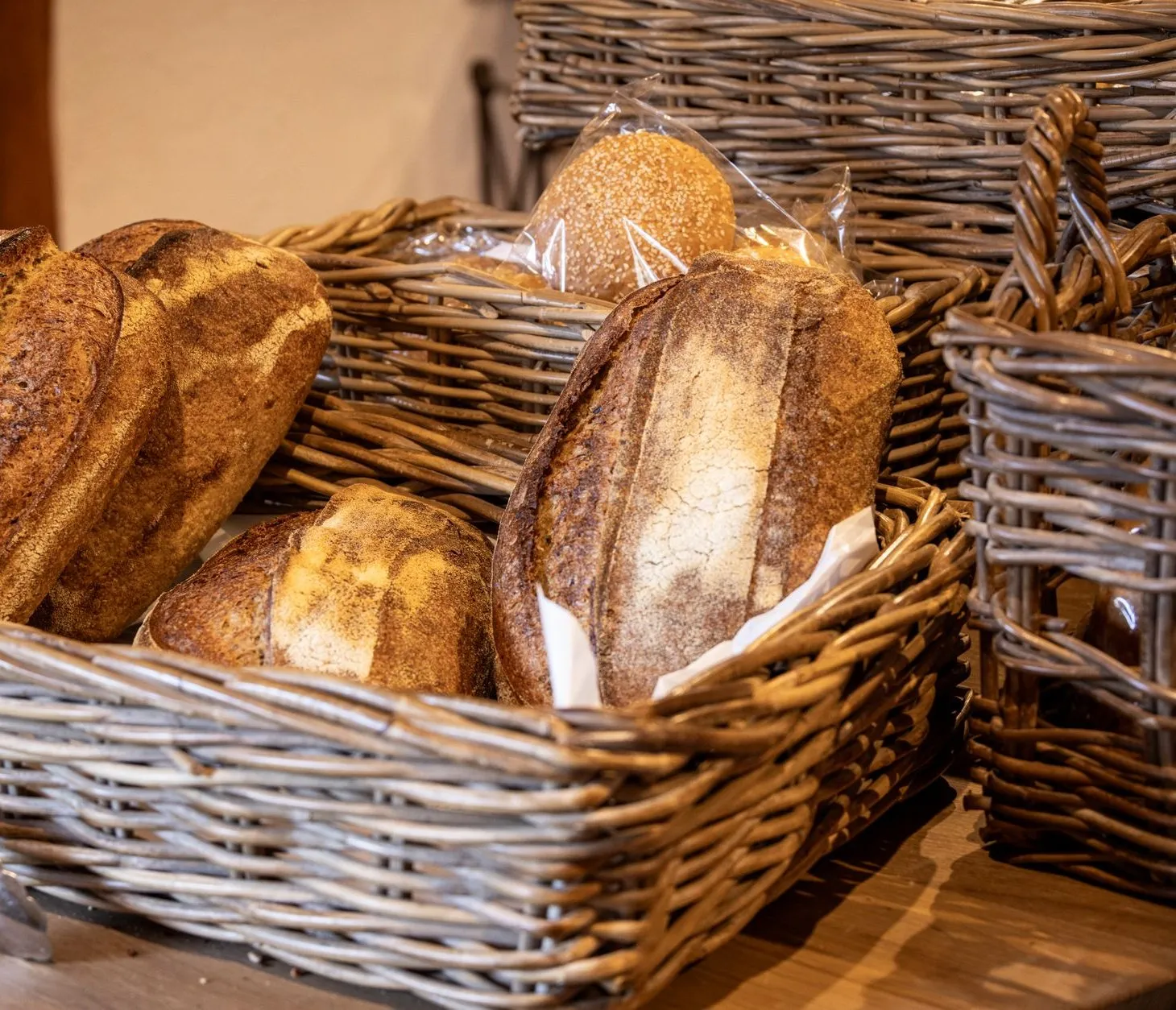
Counter
Out of the oven by 6, on the counter by 8, and anything not sold goes to the food bank that evening.
Pre-order
Order tonight, collect tomorrow morning.
Pick your bakes, a day and a collection slot. We set your order aside under your name and you pay at the counter. Orders close at 2pm the day before.
Buying for a café or restaurant? Trade prices by the case
| Bake | Case | Case price | Per unit | Counter price |
|---|---|---|---|---|
| Calder Country900 g | 6 × loaf | £26.40 | £4.40 | £6.50 |
| Row White800 g | 6 × loaf | £23.40 | £3.90 | £5.80 |
| Dark Malthouse Rye800 g | 6 × loaf | £22.20 | £3.70 | £5.50 |
| Seeded Rye Tin1 kg | 6 × tin | £25.20 | £4.20 | £6.20 |
| Spelt Miche1.1 kg | 4 × loaf | £20.40 | £5.10 | £7.20 |
| Calder Baguette300 g | 12 × baguette | £21.60 | £1.80 | £2.80 |
| Rosemary FocacciaQuarter tray, about 450 g | 4 × quarter tray | £16.00 | £4.00 | £4.50 |
| Butter Croissant85 g | 12 × croissant | £25.20 | £2.10 | £3.20 |
| Pain au Chocolat90 g | 12 × pastry | £27.60 | £2.30 | £3.50 |
| Cinnamon Bun110 g | 12 × bun | £25.20 | £2.10 | £3.40 |
Minimum order £40 a delivery, delivered 6–8am within ten miles, invoiced monthly. Wholesale terms
The bread box
£16.50 a week for three loaves
Choose three loaves, collect them on your day or have them left at the counter under your name. Change, skip or stop any week.
| What you get | Bread box | Walking in |
|---|---|---|
| Price for three loaves | £16.50 a week | About £18.80 at the counter |
| Which loaves | Your choice of three, change any week | Whatever is left when you arrive |
| Saturday sell-out | Set aside under your name | Miche and pastries often gone by 11 |
| Extras at the counter | 10% off everything else | Full price |
| Starter culture | A jar of ours in your first box | Not included |
| Commitment | Skip or cancel any week before Sunday | None |
Regulars
What the Saturday queue says
4.9 out of 5 · 412 Google reviews
“I pre-order the miche and four croissants every Friday night. Saturday I walk past a queue of thirty people, give my name and I am out in a minute.”
“The Calder Country is the only bread in the house that is still good on day five. We have stopped buying sliced bread altogether.”
“We switched our restaurant bread to Maltgarth two years ago. It lands at 7am, the invoice is monthly, and guests ask where it comes from.”
“My son is allergic to sesame and they walked me through every label without being asked twice. That matters more to me than the bread, and the bread is excellent.”
Recipes
Bake it at home this weekend
Three of our counter bakes, rewritten for a home oven and a normal kitchen.
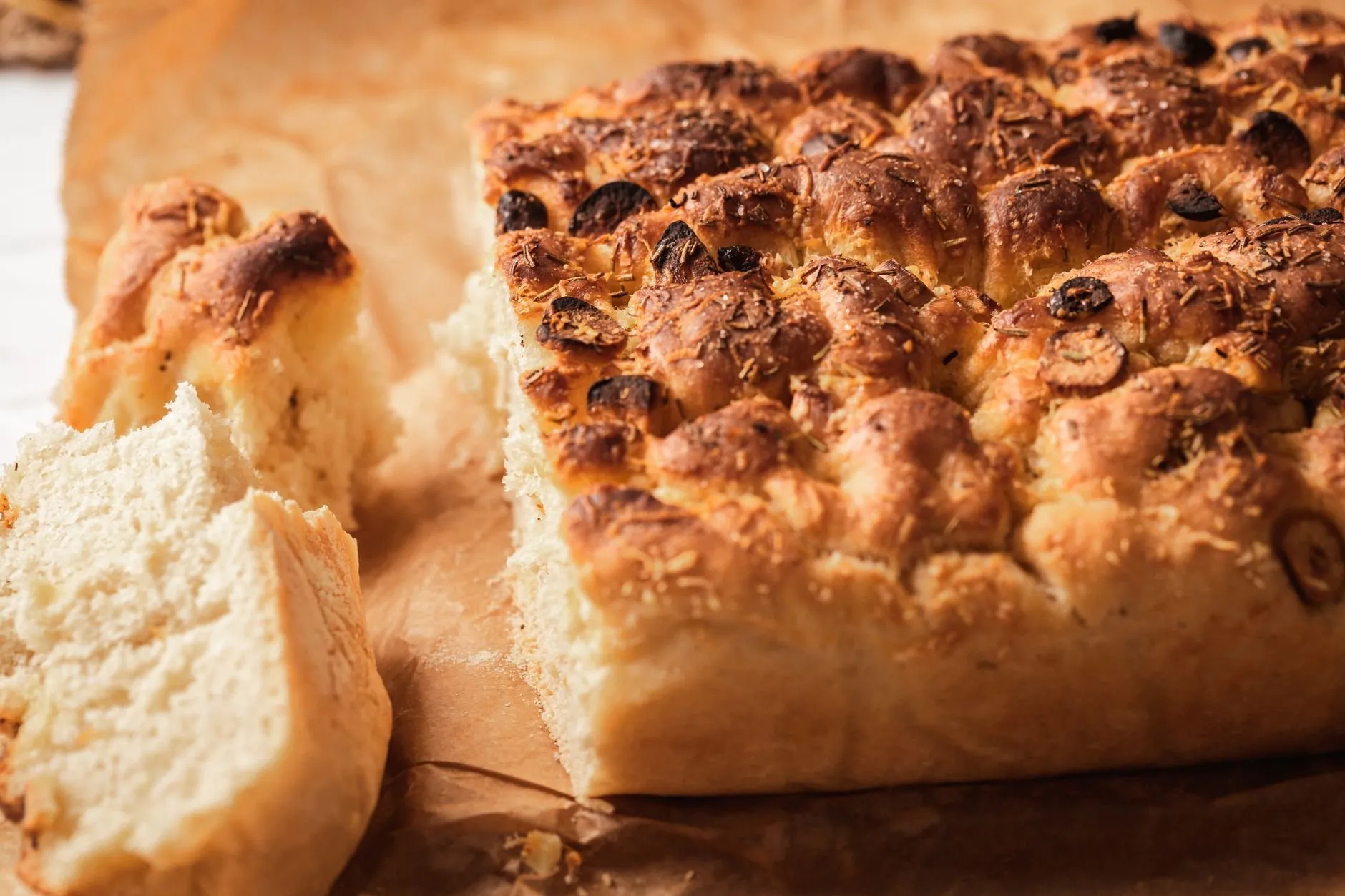
Recipe · Makes one 30 × 20 cm tin
Rosemary focaccia at home, the bakehouse way
The counter's lunchtime favourite scaled down to one roasting tin. No mixer, no starter, and most of the work is done by the fridge.
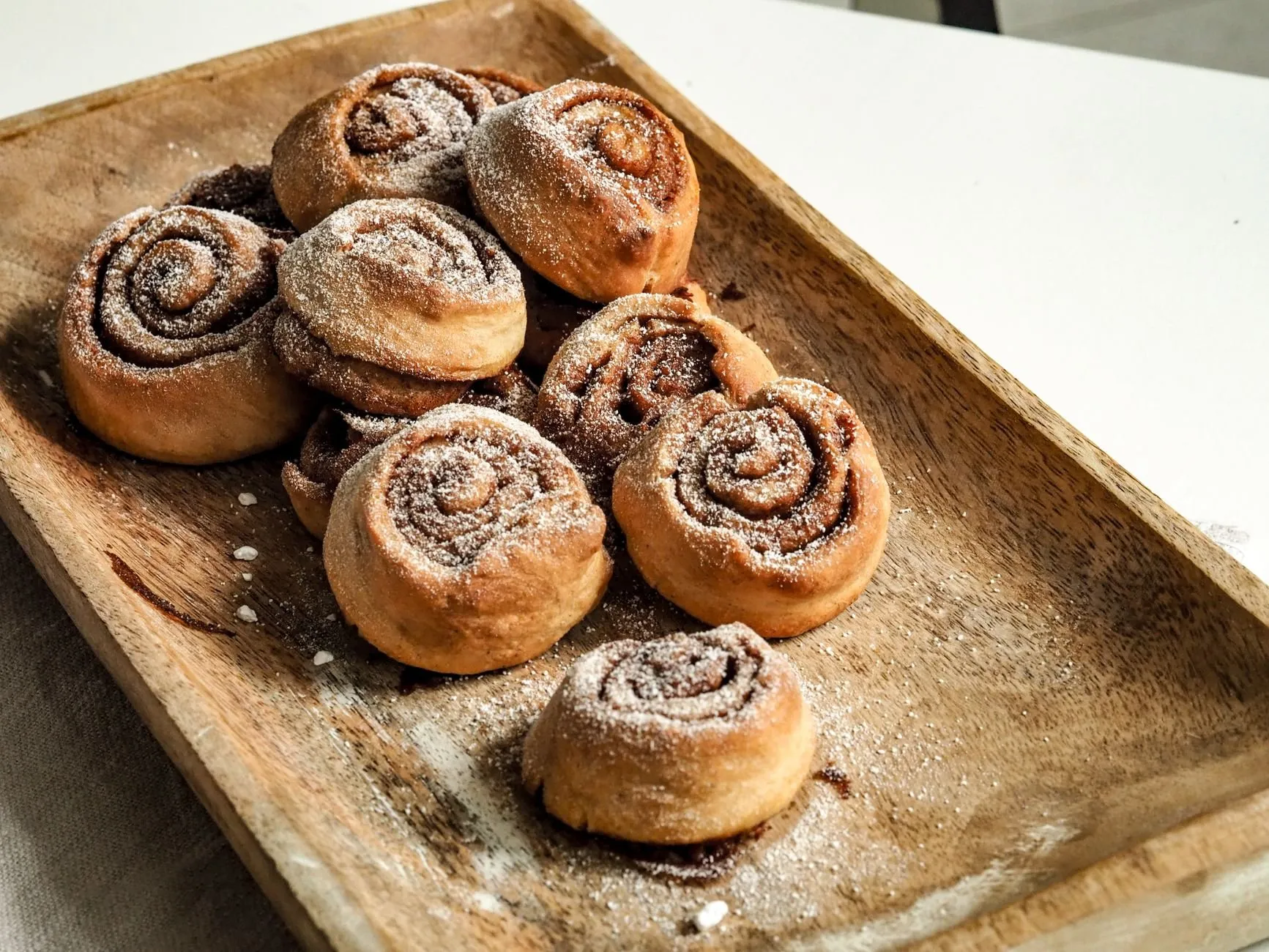
Recipe · Makes 12 buns
Saturday cinnamon buns, twelve at a time
Our counter bun, rewritten for a home oven. Make the dough on Friday night, roll on Saturday morning, eat them warm by ten.
Recipe · Makes one active starter and one loaf
Keeping the starter we gave you alive
Every bread box starts with a jar of our culture. Here is the feeding routine we use at home, plus a first loaf to bake with it.
Questions
Slicing, freezing and the 2pm cut-off
- What time should I come to get everything?
- We open at 8 (7:30 on Saturday) and the full range is out by then. Croissants and pastries usually sell out by 10:30 on a Saturday, loaves by early afternoon. A pre-order is the only way to be sure.
- How late can I pre-order?
- Orders placed by 2pm are baked for the next opening day. You can order up to seven days ahead and change or cancel until the 2pm cut-off the day before.
- Do I pay when I order?
- No. You pay at the counter when you collect, by card or cash. If you cannot make your slot, the order is held until we close.
- Can you slice my loaf?
- Yes, any loaf except the rye, which is too fresh to slice cleanly on the day. Ask at the counter, or add "sliced" to your pre-order note.
- Do you make gluten-free bread?
- No. Our flour is milled in the same room as everything else, so we cannot make a safe gluten-free loaf. We would rather say so than sell you one.
Tomorrow's bake closes at 2pm today
Everything is set aside under your name by opening time. No payment online, no account, and you can change it until the cut-off.