Journal · Recipe · 6 min read
Rosemary focaccia at home, the bakehouse way
The counter's lunchtime favourite scaled down to one roasting tin. No mixer, no starter, and most of the work is done by the fridge.
- Hands-on
- 25 min
- Start to finish
- 26 hours
- Makes
- One 30 × 20 cm tin
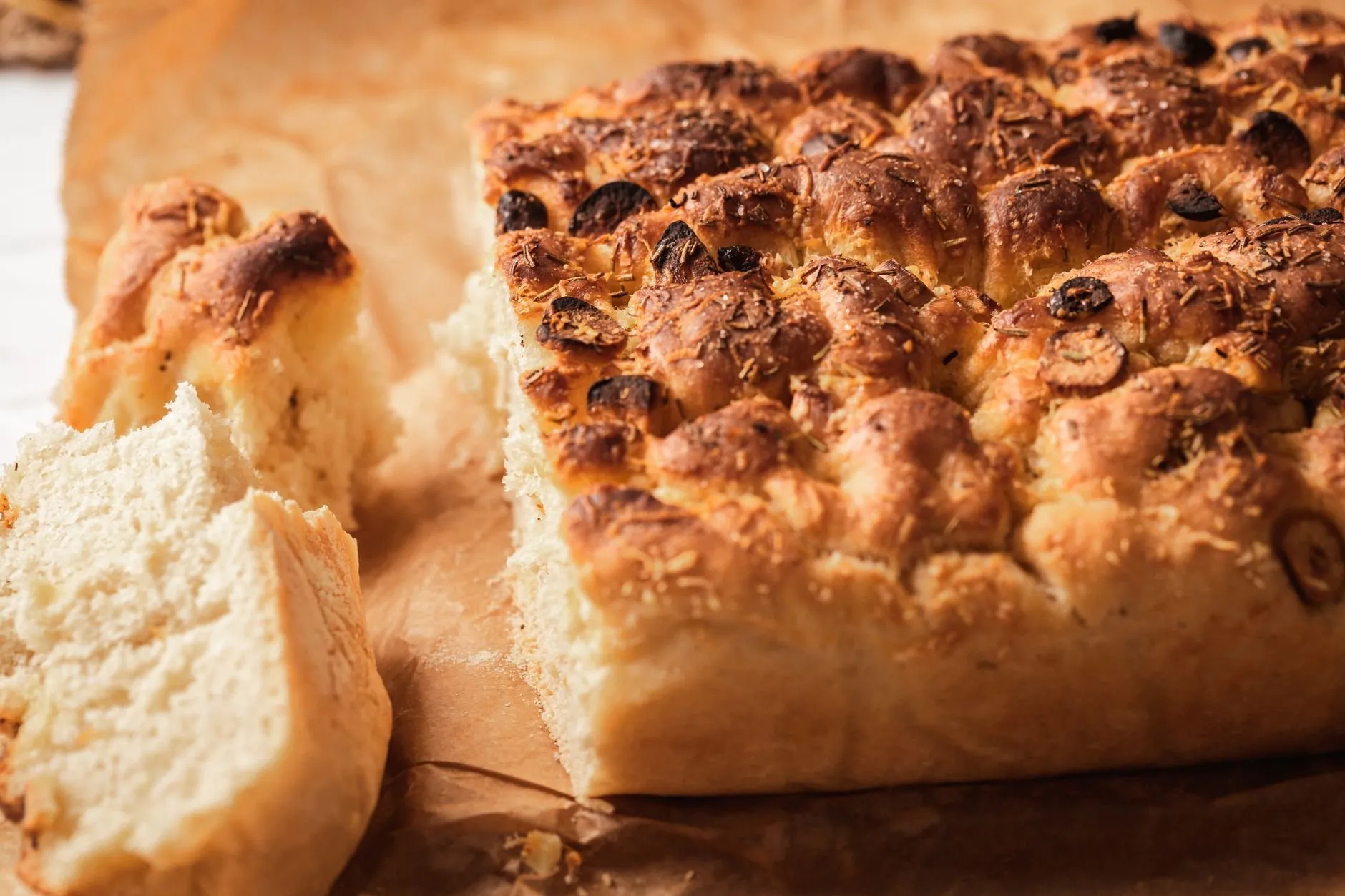
This is the focaccia we sell by the quarter tray, cut down to fit a home roasting tin. The only special equipment is a fridge and a little patience: the dough needs a day in the cold, and that day is what makes it taste of more than oil and salt.
You will need
- 500 g strong white bread flour
- 400 g cool water
- 10 g fine salt
- 3 g instant yeast (a level teaspoon)
- 60 ml good olive oil, plus more for the tin
- 2 sprigs of rosemary and a pinch of flaky salt
The day before
- Stir the yeast into the water, then add the flour and salt. Mix with your hand until there is no dry flour left. It will be sticky and shaggy. That is right.
- Cover and leave for 30 minutes.
- With a wet hand, lift one side of the dough, stretch it up and fold it over the rest. Turn the bowl a quarter and repeat, four times round. Do this three more times, 30 minutes apart.
- Pour 2 tablespoons of oil into a lidded box, tip the dough in, turn it once to coat, and put it in the fridge for 18 to 24 hours.
On the day
- Oil the tin generously. Tip the cold dough in and let it relax for 20 minutes, then gently stretch it towards the corners. It will not reach yet.
- Leave it covered in a warm spot for 2 to 3 hours, stretching once more halfway. It is ready when it fills the tin, jiggles when you shake it and has bubbles on the surface.
- Heat the oven to 230 °C (210 °C fan) with a shelf low down.
- Pour over the rest of the oil. With oiled fingers, press straight down to the bottom of the tin all over, to make deep dimples. Scatter the rosemary leaves and flaky salt.
- Bake for 22 to 25 minutes, until deep golden on top and crisp underneath. Lift a corner with a palette knife to check.
- Cool in the tin for 5 minutes, then move it to a rack so the base stays crisp.
If it goes wrong
A dense focaccia almost always means it went into the oven too early. Give the final rise the time it asks for, not the time the recipe says: a cold kitchen can double it.