Journal · Fermentation · 5 min read
Why the crumb opens
An open crumb is not luck. It is gas, and the gas is a record of how the dough was fermented, which is why you can read a loaf by its holes.
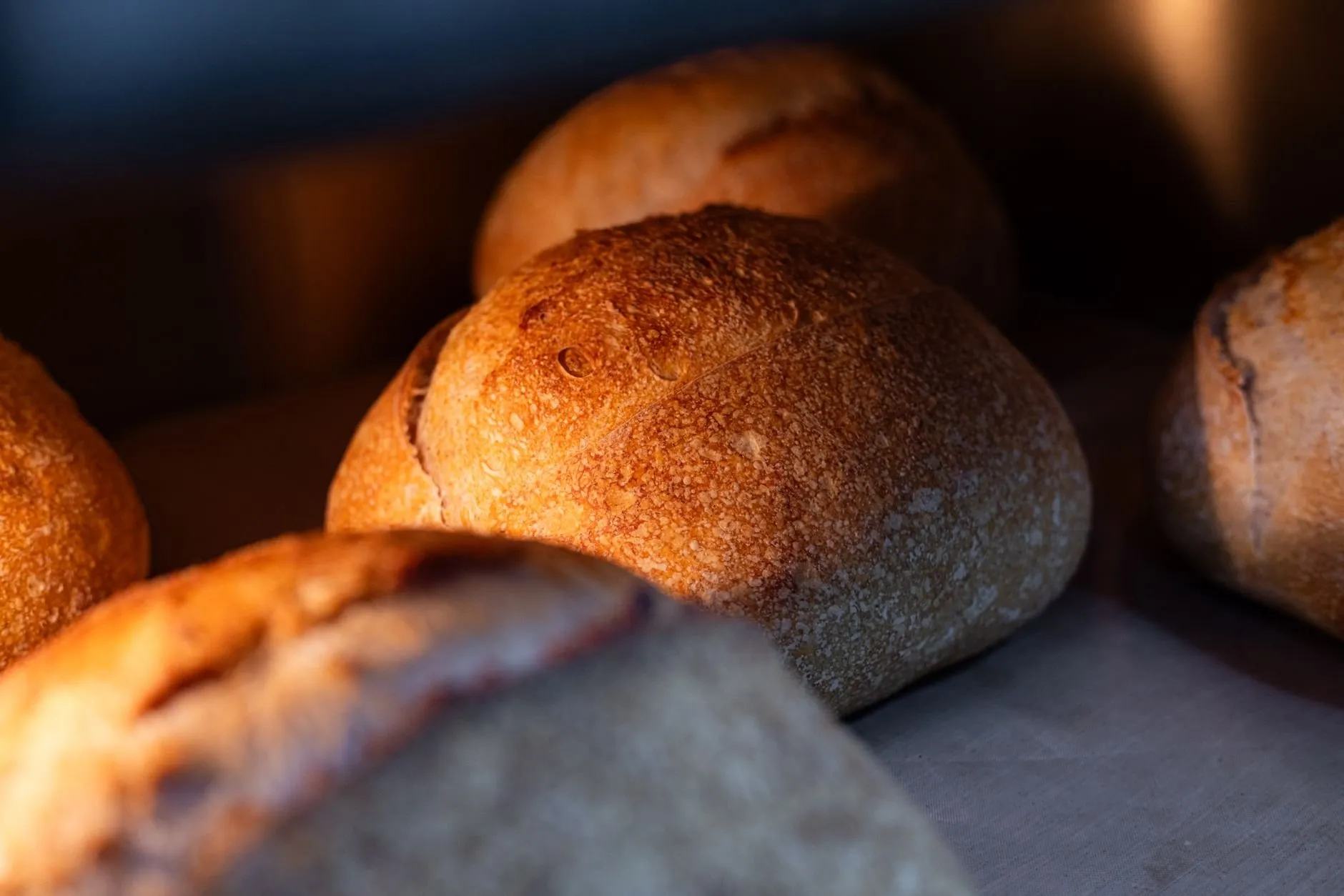
People ask for an open crumb as if it were a decoration added at the end. It is not. The holes are gas, and the gas got there because a wild culture spent a long time eating the flour and breathing out carbon dioxide. The crumb is the record of that process.
The gas has to be made, then held
Two things have to go right. First the culture has to produce enough gas: that is fermentation, and it is slow on purpose. Then the dough has to hold that gas without tearing: that is the gluten, built by folding rather than by machine.
Rush the first and there is no gas to hold, so the crumb is tight. Neglect the second and the gas escapes, so the loaf goes flat. An open crumb sits in the narrow window where a strong, stretchy dough meets a fully fermented one.
Reading the holes
- Small, even holes mean a young dough, or one kept cold. Not wrong, just early. Our rye is like this on purpose.
- Large, glossy holes mean a long proof and a high hydration. The gloss is starch set by steam in the first minutes of the bake.
- A dense streak at the base usually means the loaf went into the oven under-proofed.
That is why every shelf ticket at the counter lists the hydration and the fermentation time. Those two numbers, more than the flour, decide the holes.
What we actually do
Every sourdough here gets eighteen to twenty-four hours, most of it cold. The cold slows the yeast more than the bacteria, so the loaf keeps building flavour while it holds its shape. We fold rather than knead, four times in the first two hours, and then we leave it alone.
Cut a slice of Row White on Saturday and hold it to the window. If you can see daylight through it, that is twenty hours of doing very little, on purpose.