Journal · The mill · 4 min read
Milling our own, three mornings a week
Stone-milled flour goes stale faster than most people think. That is the whole reason we grind our own, and why the Thursday loaf tastes of more than wheat.
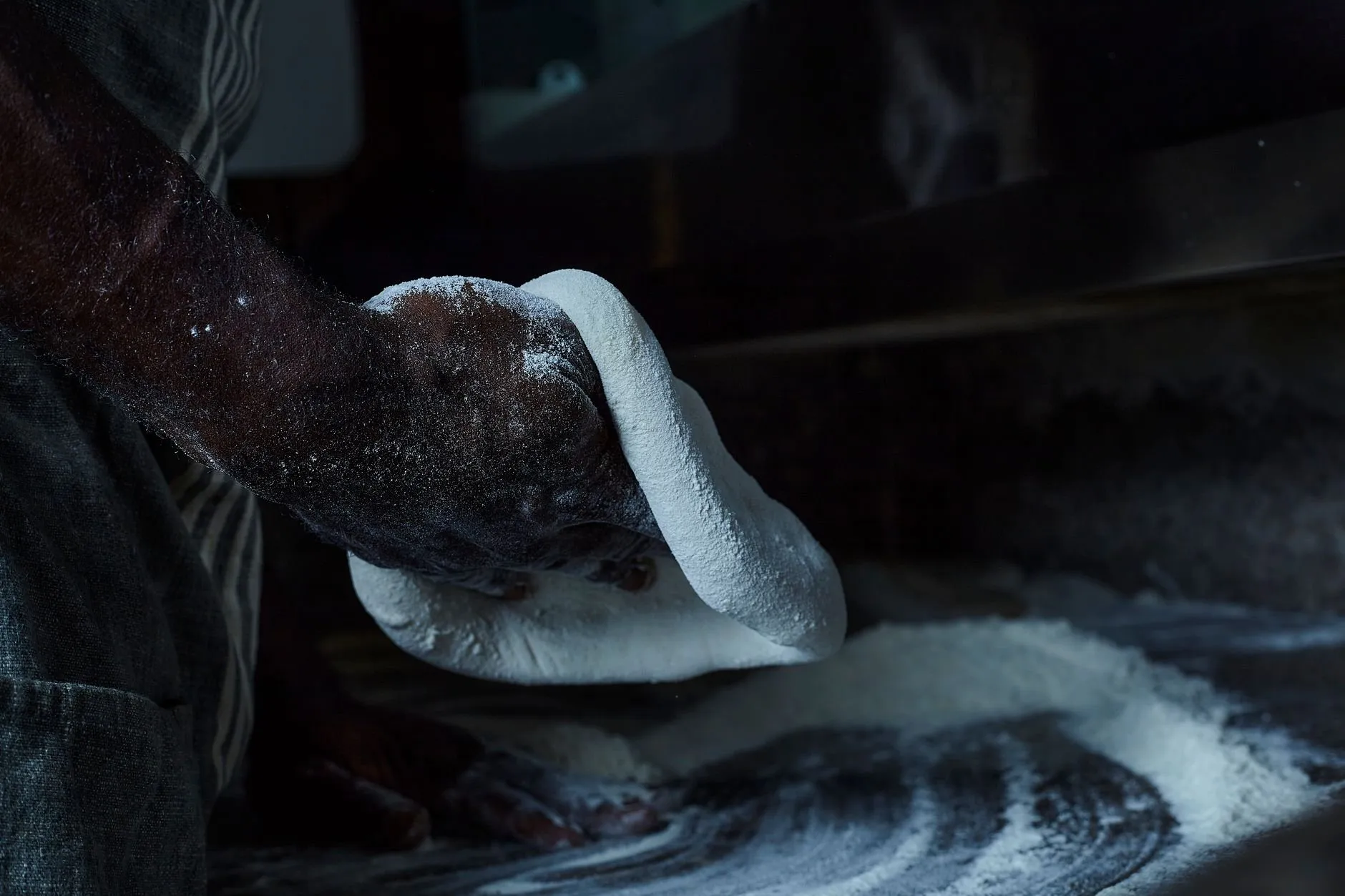
There is a tabletop stone mill in the back of the bakehouse. It runs on Monday, Wednesday and Friday mornings, and it is the reason the wholegrain in a Thursday loaf was a whole berry on Wednesday.
Fresh flour is a perishable thing
Whole wheat carries its germ, and the germ carries oil. Grind it and that oil meets the air; within a couple of weeks it starts to turn, first flat, then faintly bitter. Roller-milled flour avoids this by removing the germ entirely, which is tidy and also throws away most of the flavour.
Stone milling keeps the germ in. That is the point, and it is also the catch: the flour is at its best within days. So either you mill little and often, or you do not really get the benefit.
What it changes in the bread
- More flavour: nutty, grassy, a little sweet, none of which survives a month in a sack.
- Faster fermentation. Live germ and bran feed the culture, so a wholegrain dough proofs quicker than a white one at the same temperature. We plan the schedule around it.
- A softer crumb than people expect from wholegrain, because we mill fine and hydrate high.
The grain
We buy grain, not flour, from two farms in the county: a heritage wheat, and a rye we malt ourselves for the dark loaf. Buying the berry means we control the grind: coarse for the seeded tin, fine for the everyday sourdough, and a middling break for the rye.
It is more work than ordering flour by the pallet. It is also the difference you taste and cannot quite name. Now you can name it: it is Wednesday’s wheat.